
When we install a home burglar alarm on any property, we attempt to “think like a criminal.” This involves assessing the most likely sections of a home that provide the easiest access for burglars. Generally speaking, most homeowners focus on ground-level security with this concept in mind. However, criminals often take advantage of upper-floor security negligence to get into a home. In fact, thieves often break into a home’s upper floors specifically to avoid activating its alarm system! In addition, open second-story windows or windows with roof access can actually provide easy entry into homes. In this post, we share some tips to add security beyond the first floor of your home to help alleviate these threats.
First, we’ll look at some alarm-related security for your upper floors. Specifically, we’ll look at some alarm contacts you can add to increase security. Additionally, we’ll also look at how you can add control your alarm from additional stories of your house with additional alarm keypads or wireless key fobs. From there, we’ll shift our attention to some best practices to add general security to these areas of your home. These tips and tricks involve adding door and window hardware to your upper floors, as well as making it as difficult as possible to access your highest windows from outside your home. Now, let’s dive in with a look at alarm-related security beyond the first floor.
Alarm-Related Security Beyond the First Floor
As a complete security provider, we recognize the importance of installing a wide variety of security equipment. When it comes to creating a security plan for any application, we place designing a burglar alarm at or near the very top of the list. These alarms create a couple layers of security. For starters, they create a blaring siren response upon activation. More often than not, this encourages thieves to vacate the premises ASAP. Additionally, monitored security systems also call our central station to create a police dispatch when needed. Obviously, these reactions to a burglary can turn events around in a hurry! In this section, we share how we can use alarm equipment to better secure your second story. Let’s dive in with a look at some of the contacts we install to make this happen.
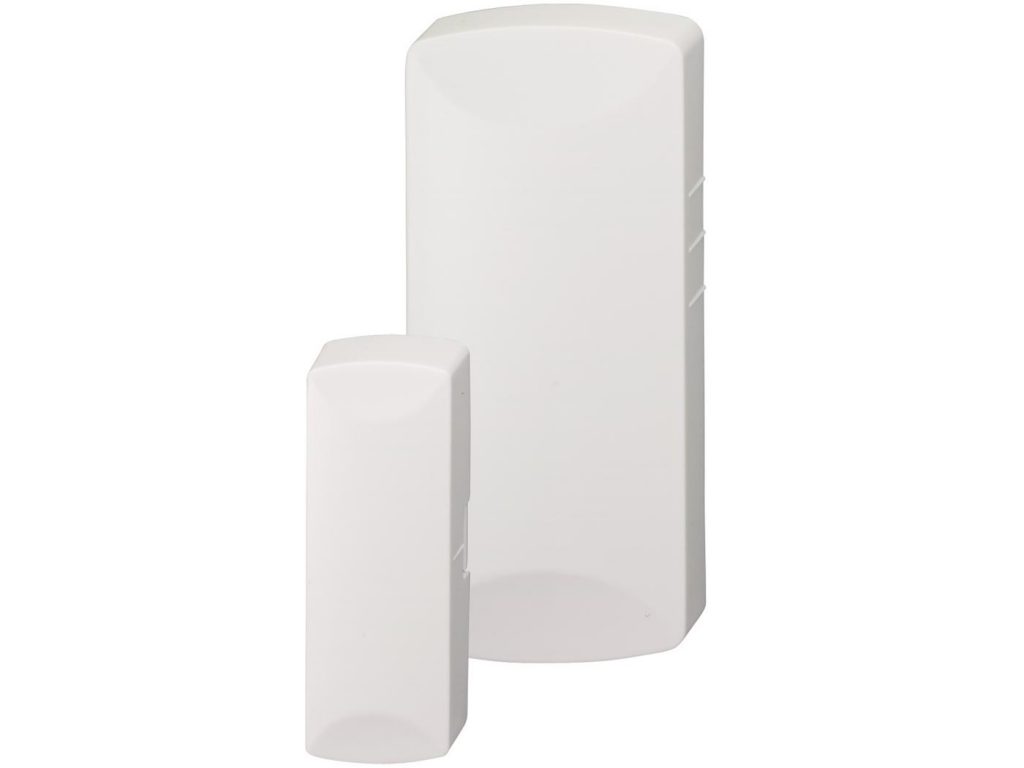
Window sensors, such as this wireless model by Interlogix, activate when the magnet (on the left) separates from the sensor itself (on the right).
Adding Alarm Contacts
When we install an alarm system, we have a huge array of potential system components and security strategies available. Most basic alarm systems rely largely on door/window contacts and motion detectors. Door and window sensors usually have two components. We install the sensor itself on a door or window, and then we install a magnet on the frame. When the magnet and the contact separate, it sends a signal to the security system, and when armed, the system will then create a siren response and a police dispatch if necessary. On the other hand, most motion detectors actually detect the change in heat created when someone walks into an area. Therefore, we can secure large areas with these detectors.
For the most part, adding window sensors and a main area motion detector on the second floor can make it just as secure as the ground floor. Additionally, we also have sensors such as glass break detectors for picture windows, and even security screens as well! These unique devices allow customers to keep their second-story windows open. The screens will create an alarm if a burglar cuts or removes them from their windows. Adding these devices makes your alarm work that much harder for you. For this reason, we always recommend installing sensors at vulnerable second-story locations. Next, let’s look at a couple ways you can control your alarm without having to go down to the first floor.
Controlling and Checking in on Your Alarm from Your Home’s Upper Stories
Last week we created a post sharing some Keypad Options for Your Alarm. In that post, we shared how controlling your alarm from a home’s second floor can create added security. After all, if you suspect something is wrong, the last thing you want to do is walk around your home to a keypad. For that reason, we recommend creating this security, and we have a few options to do so. For starters, we can install a keypad in any room. The advent of wireless keypads has made it possible for us to add this security relatively easily.
Furthermore, we have a couple options that allow you to control your alarm without using a keypad at all. For example, our wireless key fob remotes create a couple layers of security. For starters, these fobs allow you to arm and disarm your security system remotely. If you feel you may have forgotten to turn your alarm on before heading to bed, simply use your fob! Moreover, these key fobs double as a remote panic button for your alarm. This allows you to remotely activate your security system even when it is not armed. Next up, we’ll look at some non-alarm related best practices for security beyond the first floor.
Other Security Tips and Tricks
Of course, burglar alarms only represent one piece of the complete security puzzle. In this section, we’ll discuss a couple second-story home security tips that do not involve security system sensors. Specifically, we’ll look at how adding locking hardware to doors and windows can make it harder for a burglar to enter sensitive areas inside your home. From there, we will share some important “housekeeping” tips to ensure that you do not provide thieves with easy access to your home’s second story. Now, let’s take a look at the importance of adding door and window locks!
Second-Story Door and Window Locks
One of the things burglars look for when committing their crimes is easy entry into your home. In many cases, a ground-floor break-in may seem like the most practical approach. However, homeowners generally pay much more attention to first-floor security than to securing other floors. Burglars can often enter a second-story window or door with little to no resistance. For example, doorways that lead out onto porches with no stairway may not have a deadbolt. Therefore, criminals can gain easy entry into a property upon accessing these surfaces. For this reason, we recommend installing high-quality deadbolts on all of your exterior doors. Doing so adds valuable security to every area of your home.

Leaving ladders in your yard can create easy access to second-story windows for thieves.
Furthermore, a home’s second story often houses its bedrooms. In many cases, this leads to residents installing air conditioning units inside bedrooms during the summer months. Unfortunately, this leads to decreased window security, as burglars can push AC units out of these windows to gain easy access into your home. Installing window locking hardware, such as these window locks by Defender, provides additional security against these attacks. Now that we’ve looked at some security equipment to add second-story security, let’s see how making careful decisions regarding your home’s exterior can also improve your security.
Controlling Access to Your Second Floor
Not all of our second-story home security tips involve installing or buying additional equipment. In fact, homeowners can create tremendous additional security by taking basic exterior precautions. Unfortunately, residents frequently think of convenience and aesthetics over security when it comes to their yards. However, taking a moment to assess any upper-floor security dangers can go a long way.
For example, when completing work outside, make sure not to leave ladders in your yard between work sessions. Homeowners working on their gutters or roofs will sometimes commit this common security error. Moreover, watch out for sturdy tree limbs or even parked trucks or vans that provide access to second-story windows or balconies. Burglars will take advantage of this opportunity to enter a home’s most vulnerable areas. Taking these steps can deter “window-shopping” thieves from choosing your home as a target.
Putting it All Together and Creating Security Beyond the First Floor
We hope that this post aids you in creating security beyond the first floor in your own home. As always, we encourage you to contact us with any questions this post may raise for you. We will happily answer any and all of your security-related inquiries. Moreover, we also invite you to take advantage of our complimentary site survey program. We’ve long offered complimentary security audits and equipment quotes to both new and existing customers alike. Perhaps you have some security measures in place but wish to beef up security on your upper floors. Or, maybe you have very little security equipment at the moment, and wish to get started from the ground up. Either way, we are here to help! Together, we can create a complete security plan to keep your entire home — and everyone in it — as safe and secure as possible!